



Not every website needs a full rebuild. In fact, you can often refresh your website without starting over and still see major improvements; without hiring a designer, without starting over, and without wasting months of your life.
As a web designer who’s built over 100 websites for clients, I’ll admit this might make me “lose” potential clients—but I actually believe most people could do a lot on their own and see real results. You just need a plan.
Here’s how I’d approach a website refresh if I were starting today.
Step 1: Audit Your Website First
Before you touch anything, you need to audit your website. This step is critical !!!! without a plan, you risk updating randomly and missing the big picture. A proper audit lets you see what’s working, what’s outdated, and what should be prioritized.
If you’re curious about doing it yourself, I wrote a post called How to Audit Your Website for the New Year, where I walk through ten steps, including:
- Checking broken links
- Reviewing site speed
- Testing mobile-friendliness
- Examining backlinks
- Assessing overall content clarity and alignment with your business goals
- And a whole lot more 😉
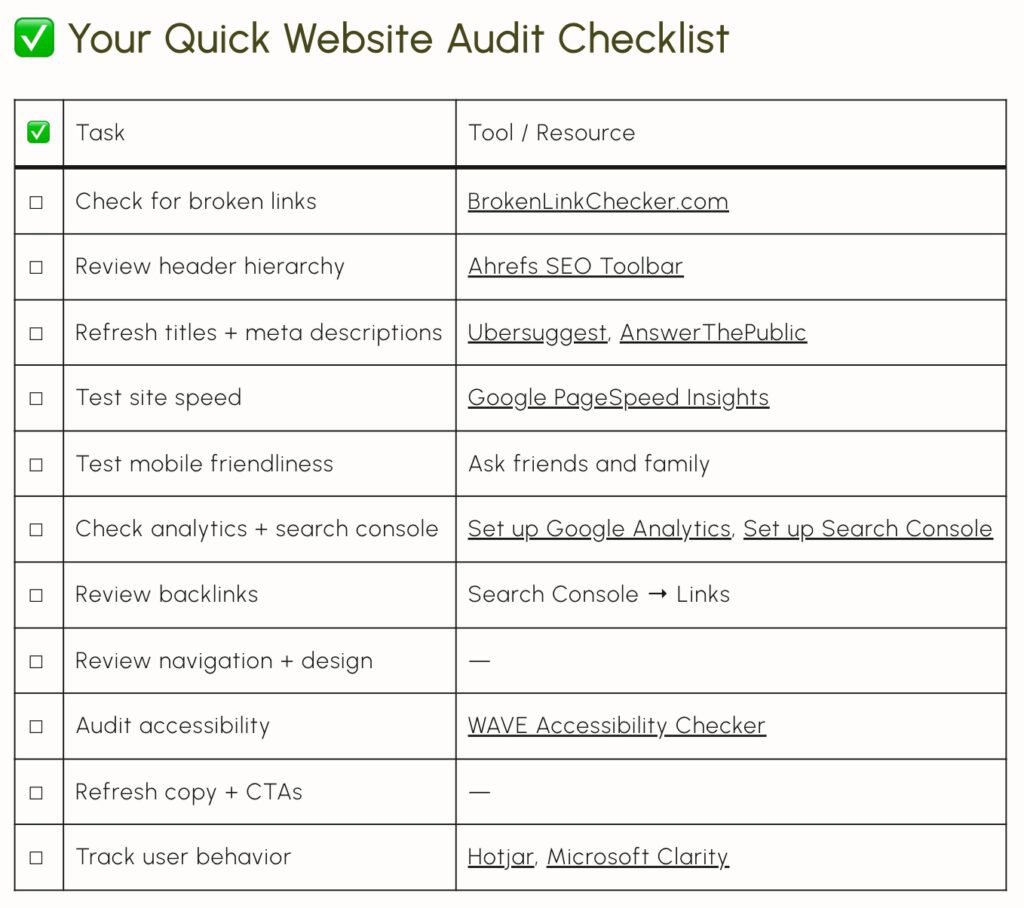
The audit is your roadmap. Once you know what needs attention, you can move confidently into updates instead of guessing. If you want a professional audit, this is included in my VIP Day, so we cover everything and make a clear plan for refreshing your website.
Step 2: Refresh Your Messaging and Copy
Next, take a close look at your website copy. Does it reflect present-day you? If your website was built one, two, or three years ago, it’s probably time to zhuzh things up a bit.
Your messaging should:
- Clearly explain your services and offerings today
- Speak to your ideal client’s pain points
- Highlight new credentials, skills, or approaches you’ve gained
- Be timeless enough to last a year or two without major changes
Every page should answer one question for your visitor: Why should I hire you?—without sounding salesy or redundant.
If you want more guidance, check out my post with friend and copywriter for 10+ years, Kayla Hollatz: Small Business Copywriter Tips to Boost Your Brand. She dives into what works (and what doesn’t) for website copy, covering things like tone, clarity, and calls to action that convert. Even skimming her insights will help you refine your messaging before any visual changes.
Step 3: Update Visuals and Design Elements
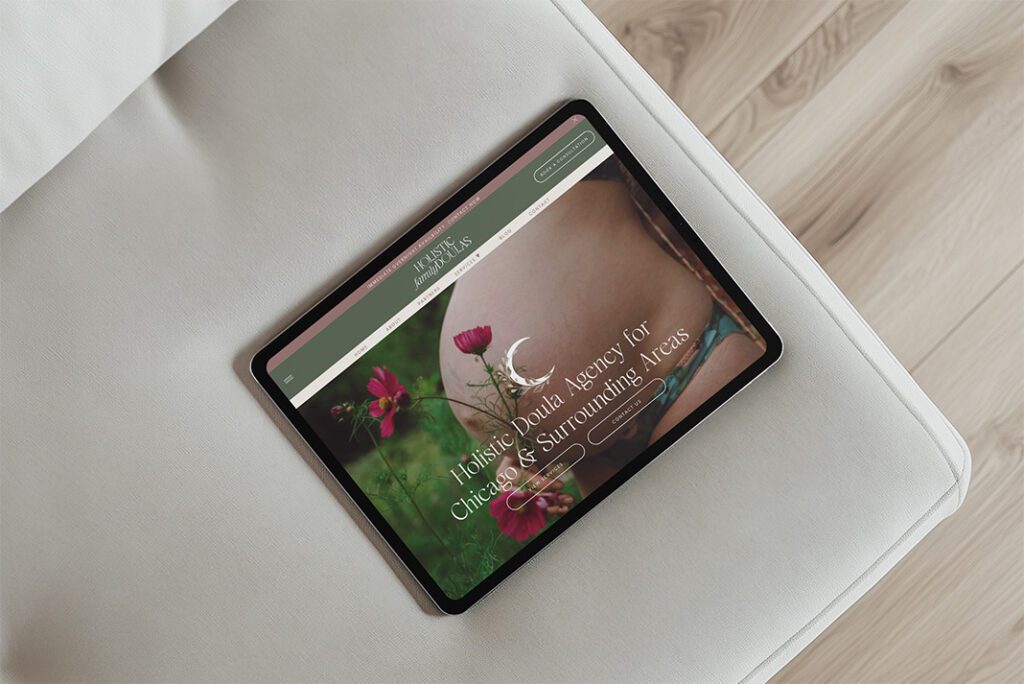
This is where most people assume they need to start from scratch, when in reality you can often refresh your website without starting over by making a few intentional visual updates.
Here’s what to focus on:
Add updated brand photos
If you’ve had professional brand photos taken in the last year and they’re not on your website, get them live. Even updating your homepage and About page images can instantly make your site feel more modern and trustworthy.
Revisit fonts (gently)
That script font you loved a couple years ago might now feel harder to read or less timeless—especially on mobile. This doesn’t mean starting over. Try using scripts more sparingly, swapping in a cleaner font, or adjusting font size and spacing for better readability.
Tighten spacing and layout
Improving spacing is one of the easiest ways to modernize a site. Look for cramped sections, overly wide text blocks, or areas that could use more white space. These small layout tweaks often make a big impact.
Refine how your colors are used
You probably don’t need new colors—just more consistency. Make sure buttons stand out, accent colors are used intentionally, and there’s enough contrast for readability.
Update small design details
Buttons, icons, and subtle design elements matter more than you think. When these feel cohesive, your website feels intentional instead of pieced together over time.
Step 4: Optimize User Experience (UX)
Arguably one of the most important steps, UX improvements directly affect whether visitors stay on your site or leave. This is something you should check at least every six months (and if you keep up with it, it should just be a ~10-20min check to make sure you know what’s really going on BTS of your site)
Key things to focus on:
- Navigation: Visitors should instantly know how to get to your services, blog, or contact page.
- CTAs: Buttons like “Contact Now” or “Book Appointment” should be obvious and consistent. Avoid fluffy, cute jargon—clarity beats cleverness.
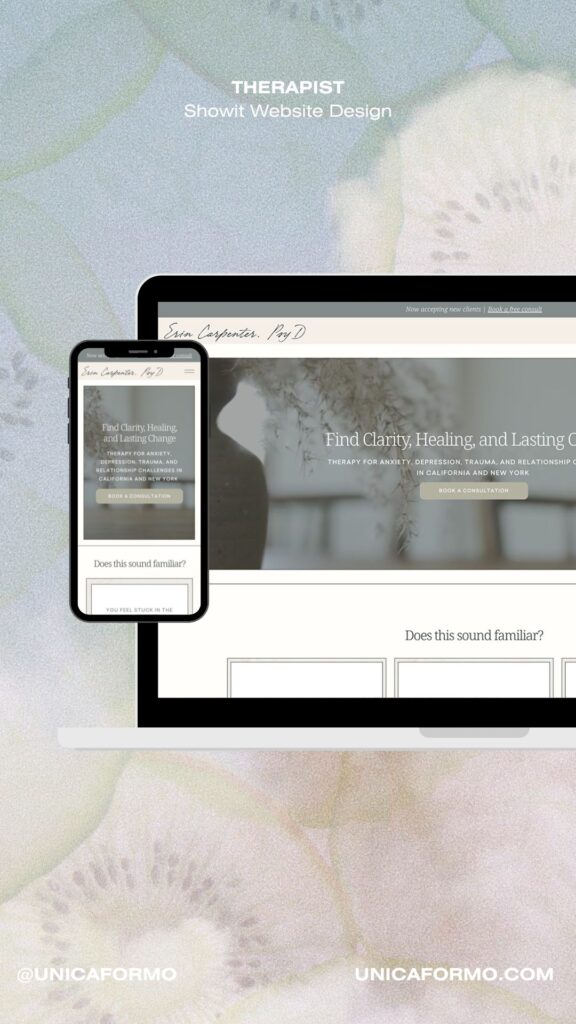
- Mobile experience: Test your site on multiple devices. Broken elements, tiny buttons, or slow loading pages are deal-breakers.
- Accessibility: Alt text, readable fonts, and strong contrast improve readability for everyone and help SEO.
For deeper guidance, my post How to Monetize Your Blog with Better Website UX walks through UX improvements that enhance your visitor’s experience and make your website easier to navigate while boosting engagement in the first half before even diving into the blogging side of things.
Step 5: Focus on Conversions and SEO
Finally, turn your refreshed website into a growth engine. This is the stage where your site really starts supporting your business goals.
- Lead forms and freebies: Make sure they’re up-to-date and valuable. If your freebie can now be easily replaced by AI, it’s time to create something unique your visitors can’t get elsewhere.
- Meta titles, descriptions, and headings: Optimized headings help both Google and your visitors understand your content. Check out Header Hierarchy in ShowIt: How to Use Text Tags for SEO for a detailed guide. It explains in detail how to update these settings on Showit, but it will give you a general understand of proper header hierarchy to use on any platform.
- Blog content: Your blog is your long-term marketing engine. Repurpose Instagram, TikTok, or other social posts into evergreen blog content targeting keywords your ideal clients are searching for. If you haven’t blogged in a while, check out my post on Blogging for SEO for tips.
This step ensures your website isn’t just looking good—it’s actively bringing in the right people and helping your business grow.
Conclusion
Sometimes a full redesign is necessary—especially if your current website doesn’t reflect your brand at all or feels outdated. But if your site generally represents you, isn’t embarrassing to share, and aligns with your business goals, you can refresh your website without starting over and still get meaningful results.
That said, there are times I can handle this for you. My VIP Day includes a complete website audit, updates to SEO settings, and optional collaboration with experienced copywriters for your blog or website copy. I can also handle full website design projects, whether that’s a custom-built site or a template customization.
Refreshing your website doesn’t have to be overwhelming. Follow these five steps, and your site will feel modern, work harder for your business, and stay aligned with your brand—without starting over.
Pin for Later:

Jordin Brinn is the founder and lead designer of Unica Formo — a creative studio in Columbus, Ohio, specializing in custom Showit website design and brand strategy for service-based businesses like coaches, consultants, therapists, creatives, and wellness professionals. With over a decade of business experience, she helps clients bring strategy, clarity, and personality to their online presence.
Explore design services and free resources at unicaformo.com.


