



- Why Learning How to Build a Website for Your Nutrition Practice Matters (Beyond Directories and Instagram)
- What to Establish Before You Build
- Required Pages (And Why They Matter)
- Let’s Talk About Blogging (Strategically)
- SEO, Photography & Visual Trust Signals
- Real Examples: What These Nutrition Websites Do Well
- FAQs About Building a Nutritionist Website
- Final Thoughts
If you’re wondering how to build a website for your nutrition practice, you’re probably in one of two places: you’re either just starting your private practice, or you’ve outgrown the DIY site you threw together when you first launched.
Starting a nutrition or dietitian private practice comes with a hundred moving pieces.
You’re thinking about licensure. Insurance panels. Client systems. Scheduling software. HIPAA compliance. Branding. Marketing.
And somewhere in the middle of all of that, you realize:
“I need a website.”
Not just something that exists. Not just a template with your name dropped in. But something that actually reflects your professionalism, attracts the right clients, and supports the long-term growth of your practice.
This guide walks through everything you should consider before launching your nutrition practice website — from branding and copy to SEO, blogging, compliance, photography, pricing transparency, and deciding whether to DIY or hire a professional.
Let’s start at the beginning.
Why Learning How to Build a Website for Your Nutrition Practice Matters (Beyond Directories and Instagram)
If you’re figuring out how to build a website for your nutrition practice, it’s important to understand why it matters in the first place.
Directories are fine.
Insurance listings are helpful.
Instagram can build visibility.
But none of those platforms belong to you.
When you build a website for your nutrition practice, you’re creating something you actually own — a space where you control the messaging, the client experience, and how your expertise is presented.
A professional website gives you:
- Full control over your messaging
- The ability to rank in search engines
- A place to educate potential clients before they book
- A trust-building tool that works 24/7
- A long-term marketing asset that grows with your practice
When someone Googles:
“gut health dietitian near me”
“PCOS nutrition support”
“sports nutrition counseling”
“intuitive eating dietitian”
Your website is what determines whether you look credible and aligned — or generic and forgettable.
Your website is your digital clinic. It should reflect the same level of care, clarity, and professionalism that you provide inside your sessions.
What to Establish Before You Build
Before choosing a website platform or hiring a designer, there are a few foundational decisions to make.
1. Branding
Branding is not just a logo.
It’s:
- Your niche clarity
- Your tone of voice
- Your philosophy
- Your visual identity
- The emotional experience of your brand
If your branding is unclear, your website will feel scattered.
If your branding is cohesive, your website feels professional immediately.
For example:
Satisfy Nourish Love
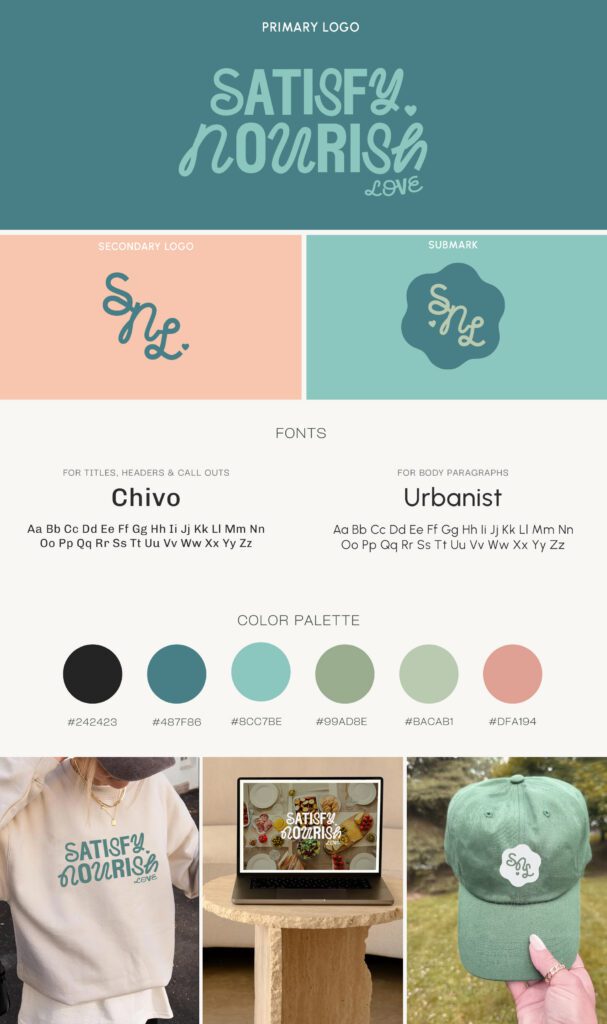
This brand feels warm, inviting, fun and supportive — which aligns beautifully with relationship-to-food work. The visuals, copy, and layout feel cohesive.
Grounded Nutrition Therapy
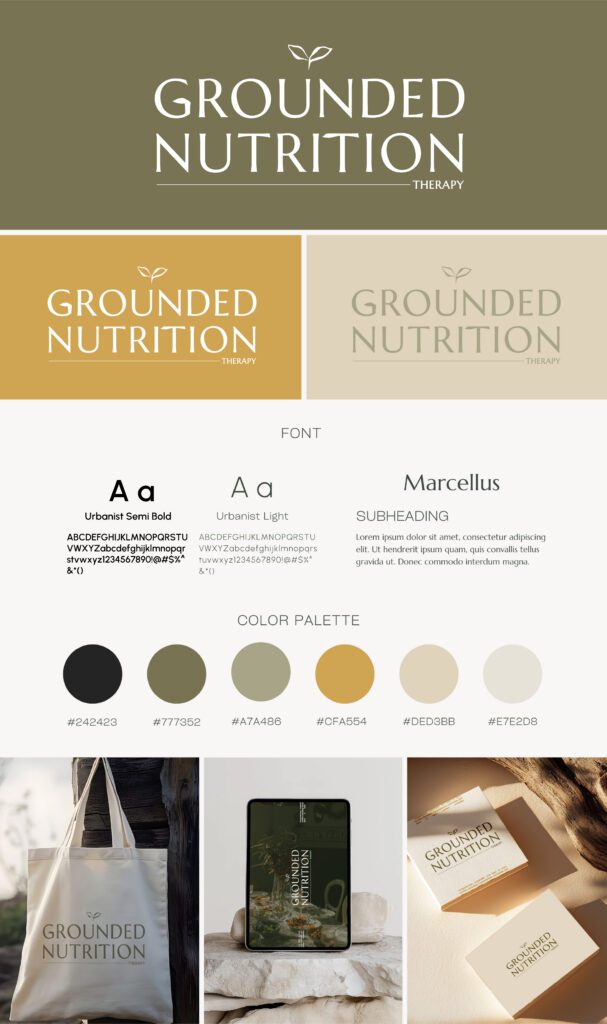
Earthy tones, calm structure, thoughtful hierarchy. The branding reinforces the name and philosophy. Nothing feels random.
When branding and website design are built together, the result feels intentional, not templated.
If you’re unsure what custom design truly means versus plugging into a template, I break that down here:
Ultimate Guide to Custom Showit Website Design (2026)
2. Your Website Platform
This is one of the first (and most overwhelming) decisions you’ll make.
And the truth is: the “best” platform isn’t about what’s easiest — it’s about what aligns with your long-term goals.
Before choosing a builder, ask yourself:
- Do I want full creative control over branding and layout?
- Am I planning to blog consistently?
- Do I want strong SEO capabilities?
- Will I eventually scale into courses, group programs, or digital products?
- Do I want to DIY long term, or eventually hand this off?
Here’s how I typically break it down for dietitians and nutritionists:
Showit (My Go-To for Creative, SEO-Friendly Sites)
If you’re still comparing platforms or want a deeper breakdown, I explain exactly how it works in this guide: What Is Showit? (Everything You Need to Know). If branding and design matter to you — and you want a website that doesn’t look like every other template-based wellness site — Showit is incredibly flexible.
It allows for:
- Fully custom design (no boxed-in templates)
- WordPress-powered blogging (strong SEO foundation)
- Drag-and-drop editing
- Easy design updates without touching code
This is what I use for most of my custom builds because it balances creativity and functionality beautifully.
If you’re planning to blog strategically (which I highly recommend), Showit integrates directly with WordPress — making SEO much more powerful. I even walk through analytics setup in this guide:
👉 How to Set Up Google Analytics (and Add It to Your Showit Site)
WordPress (For Scalability)
WordPress is powerful — but it’s not always beginner-friendly.
If you’re tech-savvy or hiring a developer long-term, it offers:
- Deep SEO capabilities
- Full scalability for memberships, advanced features, etc.
But it does require more maintenance and security management.
Squarespace (Simple, But Limited)
Squarespace works well if:
- You need something simple
- You aren’t prioritizing advanced SEO
- You’re okay working within template constraints
It’s clean and user-friendly — but customization and scalability are more limited compared to Showit or WordPress.
Kajabi (If You’re Course-Heavy)
If most of your business revolves around:
- Online programs
- Memberships
- Digital courses
Kajabi can make sense.
But for 1:1 private practice services, it’s usually more than you need (and more expensive than necessary).
My Honest Advice
Choose based on where you’re going — not just where you are.
If you’re building a serious nutrition practice that you want to grow, scale, and position professionally, your website platform should support:
- Custom branding
- Strong SEO
- Easy content expansion
- Long-term flexibility
Your website is not just a brochure. It’s your digital infrastructure.
And rebuilding in two years because you chose the cheapest or easiest option will cost you more in the long run.
3. Your Copy (This Is Where Most Websites Fall Flat)
When you’re learning how to build a website for your nutrition practice, it’s easy to focus on colors, fonts, and layout first.
But here’s the truth:
A website can look incredible and still not convert.
Why?
Because design gets attention. Copy builds trust.
If you want to build a website for your nutrition practice that actually brings in inquiries, your messaging needs to clearly communicate:
- Who you help
- What problems you solve
- How your approach works
- Why someone should choose you
Clarity beats cleverness every time.
At Unica Formo, we’ve built custom GPT systems that take branding workbook answers and transform them into polished wireframes and draft website copy. It’s powerful — especially for getting ideas out of your head and onto the page.
But I still always recommend hiring a professional copywriter if it’s within your budget — or at minimum investing in professional copy editing.
Because strong copy is what turns website traffic into booked consultations.
If you’re looking for trusted collaborators, you can find my vetted partners here.
And if you want a deeper dive into wellness-specific website messaging, this post breaks it down further.
4. DIY vs. Hiring a Professional
This is the big question.
You absolutely can DIY your website.
But here’s what that often involves:
- Writing all your copy
- Designing the layout
- Setting up SEO
- Optimizing images
- Writing alt text
- Submitting your sitemap
- Setting up analytics
- Testing mobile responsiveness
- Integrating forms
- Ensuring compliance
If you estimate even 80–100 hours total (which is realistic when you include revisions, learning curves, and polishing), and you value your time at $100/hour, that’s $8,000–$10,000 in opportunity cost.
And that doesn’t include the mental load.
Versus hiring a professional:
I typically book a few months out. Once your project begins, we do a deep dive into your business — your ideal clients, their pain points, your style preferences, your long-term goals.
During the homework phase, I learn your business inside and out.
Once design kicks off, most clients are launched with a secure, optimized, strategic website within about two weeks.
It’s not just faster — it’s focused.
Required Pages (And Why They Matter)
You don’t need a 25-page website.
But you do need thoughtful structure.
Homepage
This should clearly state:
- Who you help
- What you help with
- What makes you different
- What the next step is
No vague wellness language. Be specific.
About Page
People hire people.
Include:
- Credentials
- Your philosophy
- Why you became a nutritionist
- A bit of personality
Connection builds trust.
Services Pages (Plural — If It Makes Sense)
If your budget allows, creating separate service pages for each niche can be incredibly powerful for SEO.
For example:
- Nutrition Counseling
- Corporate Wellness Workshops
- Consulting
- Fat Loss Support
- Disordered Eating Support
- Sports Nutrition Coaching
Each page gives you the opportunity to:
- Target specific keywords
- Speak directly to that audience
- Signal clearly to Google what you specialize in
But this only works if the content is truly unique.
Copy-pasting the same language across multiple services is a waste of space and money. If you create multiple pages, they need depth and differentiation.
Yes, it increases development time and investment.
But strategically built niche service pages can significantly improve search visibility.
Pricing & Insurance Transparency
It’s important to clearly explain your pricing and insurance policies somewhere on your website.
You can:
- Create a dedicated pricing page
- Include it on each services page
- Add details to your contact page
But don’t make people guess.
This section should clarify:
- Session rates
- Insurance plans accepted (if any)
- Whether you provide superbills
- Payment methods
- Cancellation and no-show policies
- Sliding scale options (if applicable)
Being upfront about cost helps filter inquiries. It ensures that the people who reach out are already aligned with your rates.
It saves everyone time.
Let’s Talk About Blogging (Strategically)
Not journaling. Not oversharing.
Strategic, helpful blog posts that quietly market your practice without feeling salesy.
Blogging is one of the most underrated tools for nutrition practice growth.
It helps people find you through search.
It builds trust before they ever contact you.
It answers questions your potential clients are already Googling.
In plain English: a blog is often someone’s first interaction with your expertise.
You don’t need to post weekly. You don’t need to write essays every time.
Consistency matters more than volume. (If you’re using Showit, this becomes even more powerful when paired with WordPress blogging — which I explain in more detail in What Makes a Showit Website Different.)
One or two strong, SEO-friendly blog posts a month is powerful.
Even one per quarter is better than nothing.
If you want help structuring posts that actually rank, read: How to Blog for SEO (So Google Actually Ranks Your Content
Rotate through content pillars like:
- Client education (conditions, symptoms, myths)
- Service explanations
- FAQs and objections
- Your process and philosophy
- Real (anonymized) case examples
Keep it clear. Keep it human. Use examples. Write like you speak to clients in session.
SEO, Photography & Visual Trust Signals
A professional website isn’t just about words.
You need:
- Proper heading structure (like using H1, H2, and H3 tags strategically — I break this down here in Header Hierarchy in Showit)
- Optimized images
- Alt text
- Internal linking
- FAQ sections
- Submitted sitemap
- Analytics tracking
You also need at least one professional headshot.
Ideally, a mix of:
- Professional branding photos
- Lifestyle images
- Select stock photography
- Possibly AI-enhanced headshots or niche imagery (when done thoughtfully)
In the age of AI, authenticity matters more than ever. Real imagery builds trust.
Real Examples: What These Nutrition Websites Do Well
If you’re learning how to build a website for your nutrition practice, studying strong examples is one of the best things you can do.
Not to copy them — but to understand what makes them effective.
Here are a few projects from my portfolio and why they work strategically, not just visually.
A Nourishing Word
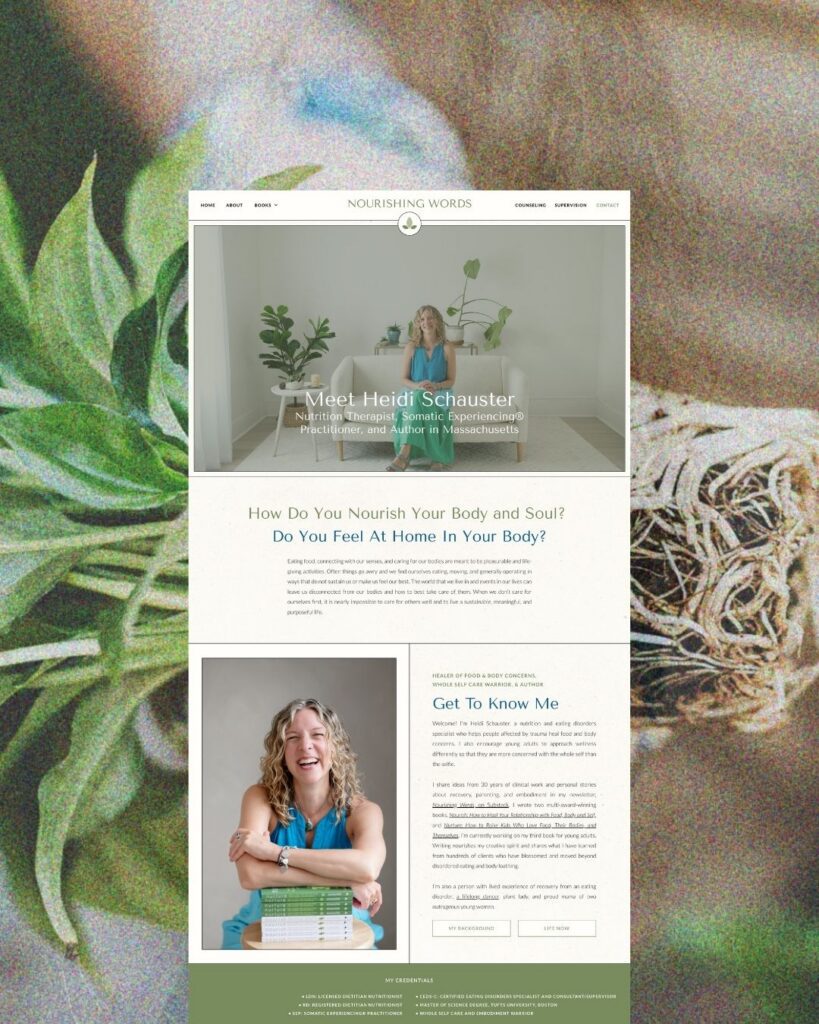
This site works because it leads with clarity and warmth.
The messaging immediately communicates who the practice serves and what transformation clients can expect. There’s no guessing. The niche is clear, the tone feels supportive, and the service structure is simple to understand.
From an SEO perspective, the service pages are thoughtfully structured to support search visibility, while the design feels elevated and cohesive.
This is a great example of how to build a website for your nutrition practice when your brand is rooted in storytelling and client connection.
BodyFit Nutrition
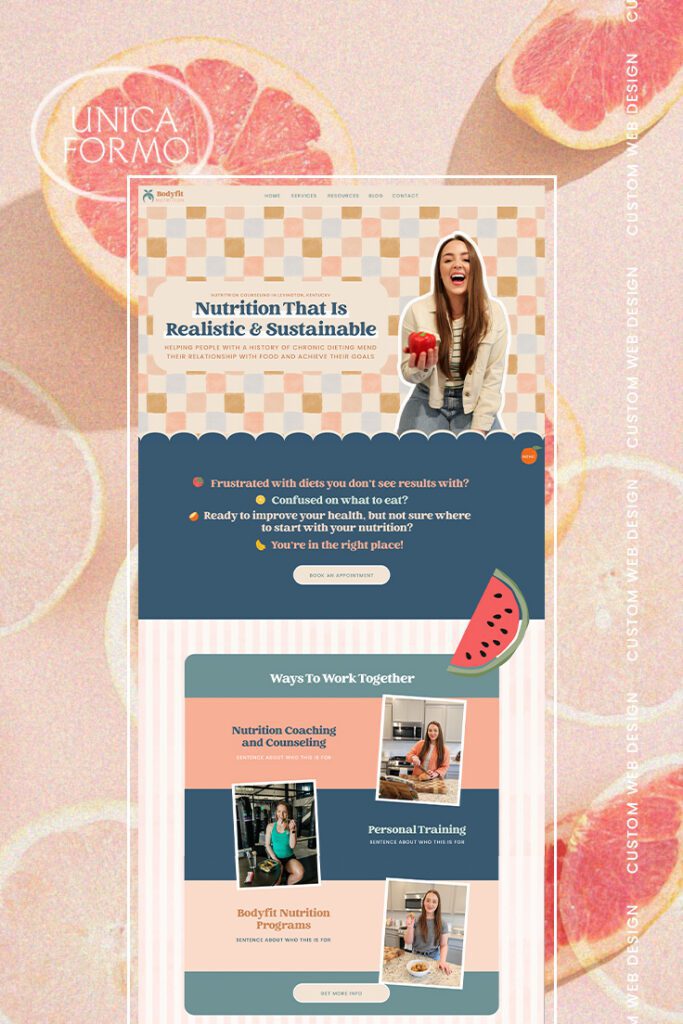
BodyFit Nutrition does an excellent job of speaking directly to a performance-driven audience
The messaging is clear and specific — it goes beyond vague “nutrition coaching” and defines who the services are for and what results clients can expect. That clarity strengthens both SEO and conversions by helping Google understand the niche and helping potential clients immediately see themselves in the brand.
The visuals and tone feel energetic yet professional, reinforcing credibility while staying approachable.
This is what happens when branding, messaging, and strategy are aligned from the start — and it’s a strong example of how to build a website for your nutrition practice with clear positioning.
Eat Beyond Labels
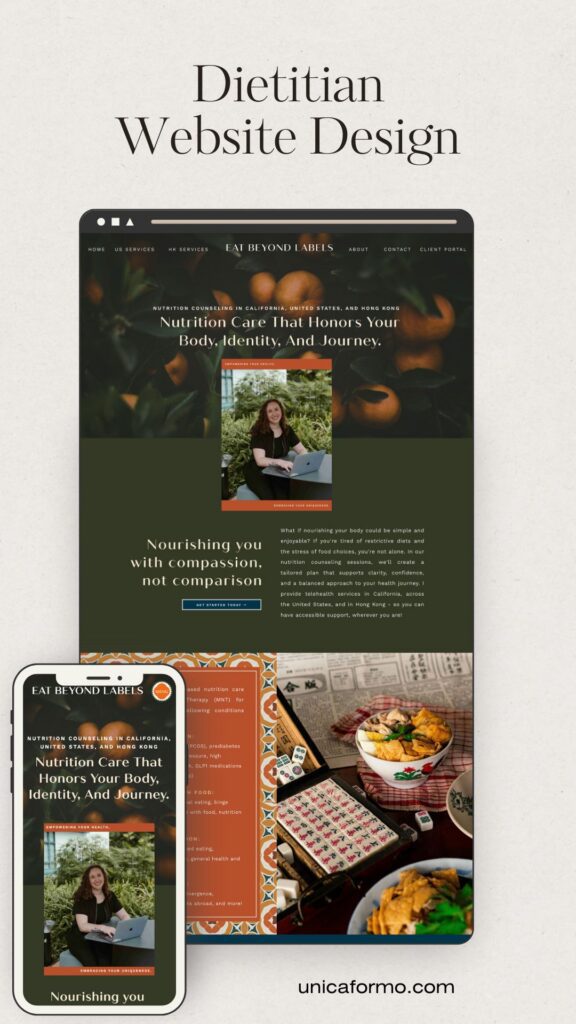
Eat Beyond Labels is a great example of how specific audience focus and thoughtful messaging elevate a nutrition practice website.
The copy speaks directly to people who struggle with rigid dieting and food rules, making it immediately clear who the practice helps and why. Services are explained with intention, not vague labels, which supports both user understanding and SEO by aligning content with focused search intent.
Visually, the site feels approachable and grounded — the colors and imagery reinforce a philosophy that feels real and supportive. This cohesive experience helps build trust quickly, so visitors feel understood before they even reach the contact form.
This demonstrates how clear positioning and consistent messaging are essential components of how to build a website for your nutrition practice in a way that feels both human and strategic.
Virtual Nutritionist Website Design
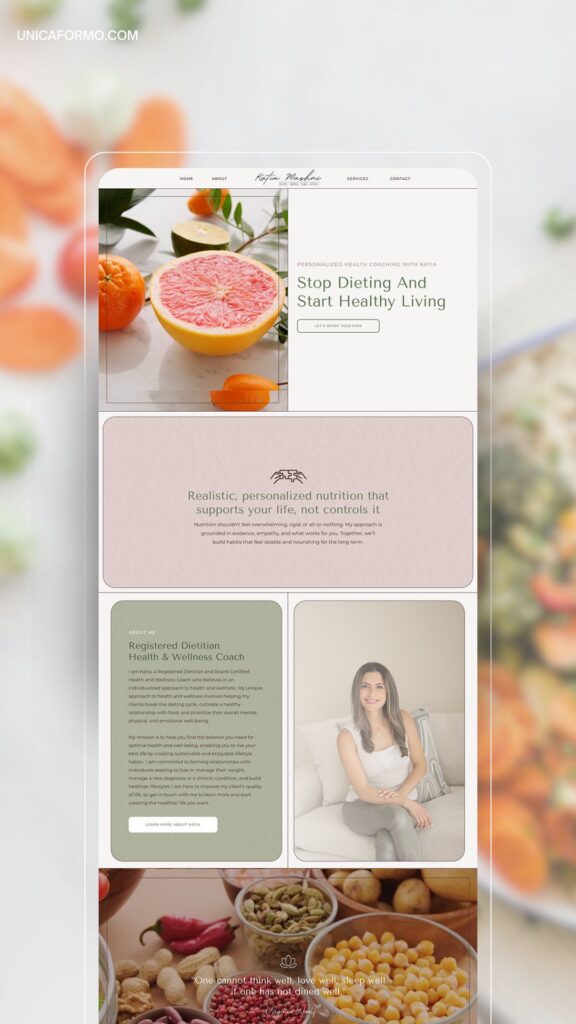
RDC Nutrition is a strong example of how clear specialization and organized structure make a site both user‑friendly and intentional.
From the moment you land on the homepage, the messaging clearly communicates the practice’s focus and philosophy, which helps potential clients immediately understand whether it’s a good fit. The services are broken out in a way that avoids generalities and instead shows specific areas of support — making it easier for search engines to index and for clients to connect with the right offering.
Visually, the site strikes a balance between professional and approachable, with a layout that guides users without overwhelming them. This cohesion between design and copy reinforces credibility and makes the experience feel thoughtful from start to finish.
It’s a great example of how to build a website for your nutrition practice that feels strategic and client‑focused — not generic.
Gut Health Dietitian Website
Good Gut Nutritionist stands out for its trust-building and client-focused design.
The site immediately establishes credibility with clear credentials, professional imagery, and approachable visuals, helping visitors feel confident before even reaching out. The layout guides users naturally through services, resources, and educational content, making it easy to navigate without feeling overwhelming.
What makes this website particularly effective is how it balances professionalism with approachability. The combination of friendly photography, consistent branding, and thoughtful sectioning creates a seamless experience that makes potential clients feel seen and supported.
It’s a strong example of how to build a website for your nutrition practice that not only attracts clients but also establishes trust and professionalism from the very first interaction.
Each of these sites works because they combine:
- Clear branding
- Strategic messaging
- Thoughtful structure
- SEO foundations
- Professional imagery
They aren’t just pretty. They’re built with intention.
You can explore more of my nutrition and wellness website design work here: Portfolio for Nutritionists & Health and Wellness Portfolio.
FAQs About Building a Nutritionist Website
How much time should I expect to dedicate to building my website?
DIY: expect 80–100+ hours between writing, designing, editing, SEO setup, testing, and polishing. Spread across evenings and weekends, that can mean months.
Hiring a professional significantly shortens the timeline.
Is it worth hiring a designer?
If you want a site that differentiates you, supports SEO, and converts — yes. Especially if your time is better spent serving clients. It really depends on where you are at in your business.
Do I need separate service pages?
If you have distinct niches and the budget to create unique, optimized content for each — absolutely. It’s powerful for SEO. But only if done well and if it’s in your budget.
Do I need a blog?
If you want organic traffic and have the ability to write (or hire out the writing of) quality blog posts, yes. It’s a long-term growth tool.
What platform should I use?
Choose based on your long-term goals not just what feels easiest today. If strong branding, customization, and SEO matter to you, platforms like Showit or WordPress give you far more flexibility than basic template builders. If you’re primarily selling online programs, something like Kajabi may make sense.
The key is thinking ahead: Will you blog? Add multiple service pages? Scale into courses? Your platform should support where your practice is going, not just where it is right now.
Final Thoughts
Your nutritionist website is not just a requirement. It’s your credibility, your authority, your marketing engine and your first impression.
It should reflect the depth of care and professionalism you bring to your clients. And when done well, it becomes one of the most powerful assets in your private practice.
If you’re ready for a website that not only looks professional but is built to grow with your practice, you can explore my Custom Showit Website Design Services to see how I approach strategy, design, and SEO together.
Or, if you already have a template and just need help bringing it to life, my Showit Template Customization Service is designed to transform it into something that actually feels like your brand.
Pin for Later:

Jordin Brinn is the founder and lead designer of Unica Formo — a creative studio in Columbus, Ohio, specializing in custom Showit website design and brand strategy for service-based businesses like coaches, consultants, therapists, creatives, and wellness professionals. With over a decade of business experience, she helps clients bring strategy, clarity, and personality to their online presence.
Explore design services and free resources at unicaformo.com.


