


- Getting Started with Social Media as a Therapist
- How Therapists Actually Show Up on Social Media
- What Social Media Does (and Doesn’t) Do for a Practice
- Advice and Lessons from Therapists Using Social Media
- Therapists Use Different Platforms: Here’s What’s Working for Jazzmyn and Bianca
- Making Social Media Work for Your Practice
- FAQ about social media for therapists
They don’t exactly teach you how to market your private practice in grad school.
At some point, you realize you need to be listed on directories, have a website that actually explains what you do, and maybe even think about SEO (I have a whole post on SEO for therapists if you want to peek).
And then… there’s social media.
Every time you scroll Instagram, there’s another therapist with a massive following, posting regularly, sharing insights, building a brand, and it can make you stop and think.
Okay… is this something I should be doing too?
Social media can be incredibly powerful. You can build trust, connect with potential clients, and extend your reach in ways you never could before.
But at the same time…
- Is it a total time suck?
- Is it actually necessary?
- Is it even ethical to show up this way?
- And if you do decide to do it, where do you even start?
As a web designer who works with therapists often, I see this from a slightly different angle. Marketing a practice isn’t just one thing. It’s usually a mix—your website, SEO, referrals, directories… and now social media is part of the conversation too.
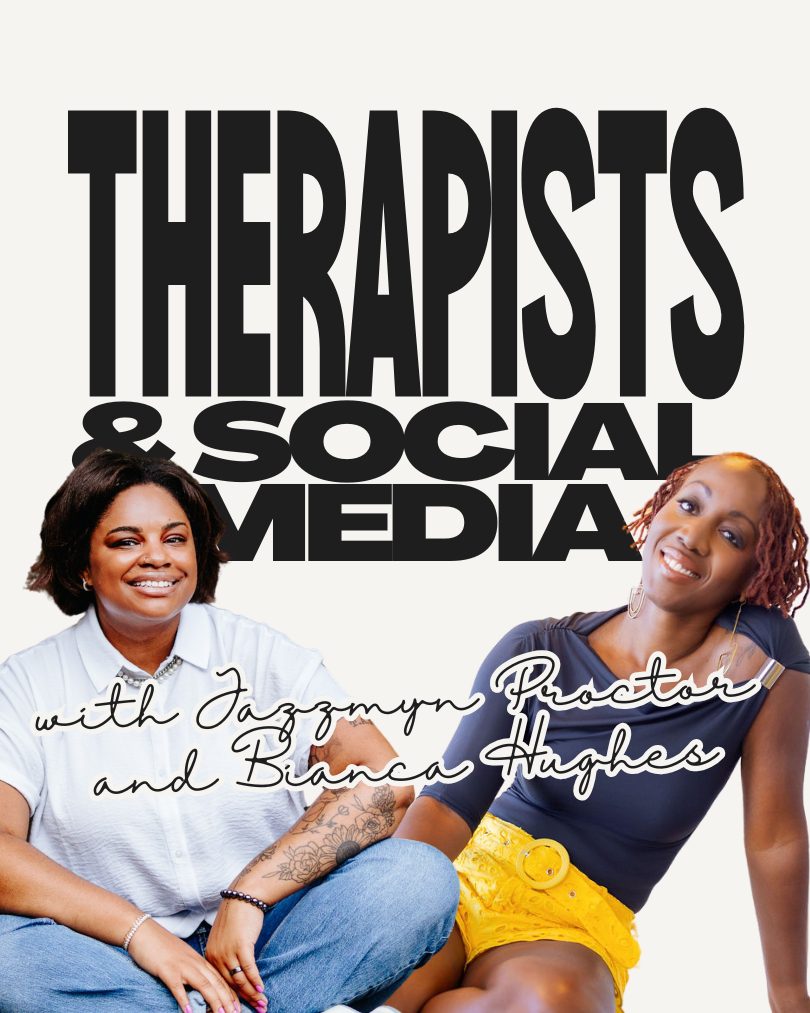
Which is why I wanted real insight. I recently chatted with Jazzmyn Proctor and Bianca Hughes, two therapists actively using social media to grow their presence, connect with their audience, and support their practices. While both use social media as a growth tool, each has found their own rhythm. Jazzmyn takes a bold, exploratory approach—testing formats, sharing her journey, and leaning into visibility. Bianca is strategic and selective, focusing on authenticity, boundaries, and content that aligns with her values.
What they shared made it clear: social media for therapists isn’t black and white. It can be a game-changer but is also nuanced, sometimes messy, and yes, a little stressful.
Getting Started with Social Media as a Therapist
The truth is, social media for therapists isn’t one-size-fits-all. Juuuust because Jazzmyn or Bianca has found a rhythm that works for them doesn’t mean it’s the only way to do it, or that you have to do it at all. If daily posting or showing up on video feels overwhelming or outside your comfort zone, you can still grow your practice in other ways.
(Personally, I’ve never been someone who loves the idea of showing up on social media every day. I’ve focused heavily on blogging, Pinterest, and SEO as strategies to bring people to my business without relying on constant posts. That said, every time I do post, even ~reluctantly~ I see engagement that’s real. I’ve gained clients, built community, and connected with other professionals in my industry. So while my initial connotation to social media is negative, I can’t deny the value it brings.)
Jazzmyn shared a similar perspective. She first got into social media in 2020 while building platforms for a quasi-government agency. Later, she started posting for herself, connecting with other therapists, sharing her journey, and building credibility. “I look at my social media as a second job,” she said. “It’s been a referral source, a place to build my voice, and a way to connect with people in the field.”
Bianca’s journey was a bit different. She started with Instagram in 2016 posting inspirational quotes, then rebranded to focus on her niche. She slowly integrated videos and more personal content over time. “I focus on platforms that feel easy for me and where I can be authentic,” she explained. For her, social media isn’t just about client acquisition—it’s about staying connected, providing social proof, and sharing her expertise with a broader audience.
What this shows is that there really isn’t a single “right” way to start. You can experiment, pick what feels manageable, and still see results. The platforms they chose, how often they post, and the type of content they share work for them, but your approach can and should reflect your your values and the amount of energy you’re willing to invest. Also: it can evolve!! Don’t think if you don’t go all in right away that it’s a failure/not worth it. You can build up momentum, try different posting styles, feel out in real time what works/doesn’t work for you and your practice.
How Therapists Actually Show Up on Social Media
Once you decide to dip your toes into social media, the next question is… what does that actually look like in practice? Jazzmyn and Bianca each have their own way of showing up online (and you will too), and their approaches give a lot of insight into how you might approach it yourself.
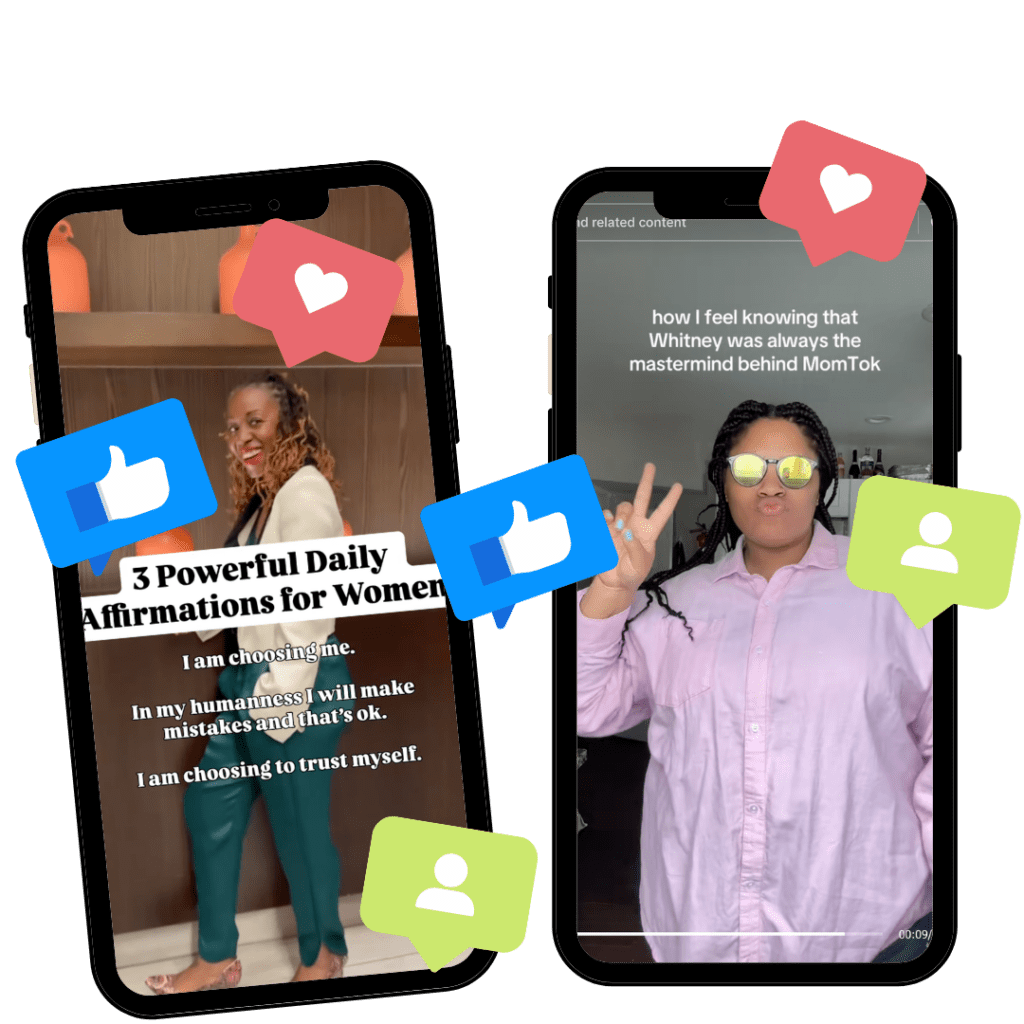
Jazzmyn leans into formats that feel natural, like video and carousel posts, and also produces a podcast, The Visibility Standard. “The content that does best is when I talk in front of the camera,” she said. “It allows people to connect, see my tone, and decide if I’d be a fit.” Social media has become a place to share insights, build connections, and generate referrals—but she balances it carefully with her energy.
Bianca focuses on authenticity and ease. She uses Stories and interactive features like polls to connect without feeling “on stage.” Social media is a tool for relationship building rather than a constant client funnel. Threads allows her to respond to questions and spark conversation without the pressure of visual content.
Both approaches reflect their personalities, values, and comfort levels. Jazzmyn experiments and explores visibility boldly, while Bianca prioritizes authenticity, boundaries, and meaningful connection.
There isn’t a single formula or platform that works for every therapist. What matters is figuring out what feels manageable, aligns with your goals, and allows you to engage in a way that’s sustainable. Over time, you can adjust and evolve your strategy as your practice grow.
What Social Media Does (and Doesn’t) Do for a Practice
Talking with Jazzmyn and Bianca made one thing really clear. Social media can have a real impact, but it also comes with boundaries you need to consider. Both have found it can boost visibility, build community, and even help with business but only if you approach it intentionally and sustainably.
Jazzmyn has seen all of that firsthand. She has gotten clients, podcast guests, media opportunities, and connections with other professionals from her presence online. “It all works together,” she said. “I’ve gotten clients, brand opportunities, podcast listeners, and media features from social media.” For her, engagement and conversions are the priority. She is not just chasing followers. She wants people to feel included, to interact, and to trust her voice.
Bianca has a slightly different experience. Social media has not been her main source of clients, but it has definitely driven website traffic and helped her stay connected with her audience. She treats platforms as tools for social proof and relationship building rather than a constant client funnel. “Pick one you enjoy, know how to use it, and give it a trial for about six months with consistency,” she advised. Social media is part of a bigger marketing mix, and knowing your limits is essential.
Both therapists also emphasized boundaries. Jazzmyn uses social media as a “congruence test,” making sure her online presence matches how she shows up in session. She also removes herself from negative spaces to protect her energy. Bianca sets practical limits, like having a social media strategist and putting time restrictions on her phone, while still posting in ways that feel authentic and ethical.
Even for me, as someone trying to engage on social media but maintain balance, this hits home. I’ve been thinking about getting a separate phone just for business, keeping it in my office so it’s only used for posting content. That way, I’m not constantly scrolling or consuming more content than I need to. Evvvvverything — the posts, the videos, the photos, etc. would live there, and my personal phone wouldn’t get cluttered with thirty takes of a single video or random content. It’s a small step, but it helps me contain social media to its proper space and protect my focus and energy.
Social media can support your practice without taking over your life. Being intentional about platforms, content, and boundaries matters just as much as posting consistently. You can create impact while protecting your energy and shaping a strategy that works for your personality and your goals.
Advice and Lessons from Therapists Using Social Media
Jazzmyn talked a lot about the learning curve of social media and the value of flexibility. She has found that giving herself permission to change course as she goes has been really helpful. “I think one of the biggest lessons I have learned is that pivoting is a good thing,” she said. “The more we allow ourselves to pivot with our needs and the needs of our business, content creation can be a catalyst to that change.”
Her approach has involved testing different kinds of content and starting conversations rather than aiming for perfection. For her, success isn’t just followers or likes, it’s engagement: “My definition of success is any post that starts a conversation,” she explained.
Bianca echoed that experimentation matters, and she pointed out how community and connection shape her strategy. When she notices what her audience responds to, that informs her future content. She has seen strong engagement when she shares on Stories, especially with polls. “People love when I do affirmations or permissions in my stories with the polls,” she said, “that’s what works for me by the way.”
Bianca has also learned what doesn’t work and why paying attention to that matters. She shared that having someone else post for her made her audience disengage because “people knew it was not my voice,” and she noticed traffic dip. She also pointed out that not looking at analytics was a mistake early on, because it meant she wasn’t actually seeing what people needed or wanted. “Not looking at my analytics to see what is working, that matters so you know what people actually need,” she said.
Both therapists talked about the value of community learning and reflection. Bianca said she watches what other clinicians experiment with and sees what sparks conversation without feeling like she has to copy anyone. And Jazzmyn often pulls from conversations, trends, and everyday experiences to shape her content in ways that feel relevant and useful.
Taken together, their advice isn’t about perfection or visibility for visibility’s sake. It’s about learning what resonates, paying attention to real engagement cues, and letting your content evolve over time in ways that reflect your voice and your work.
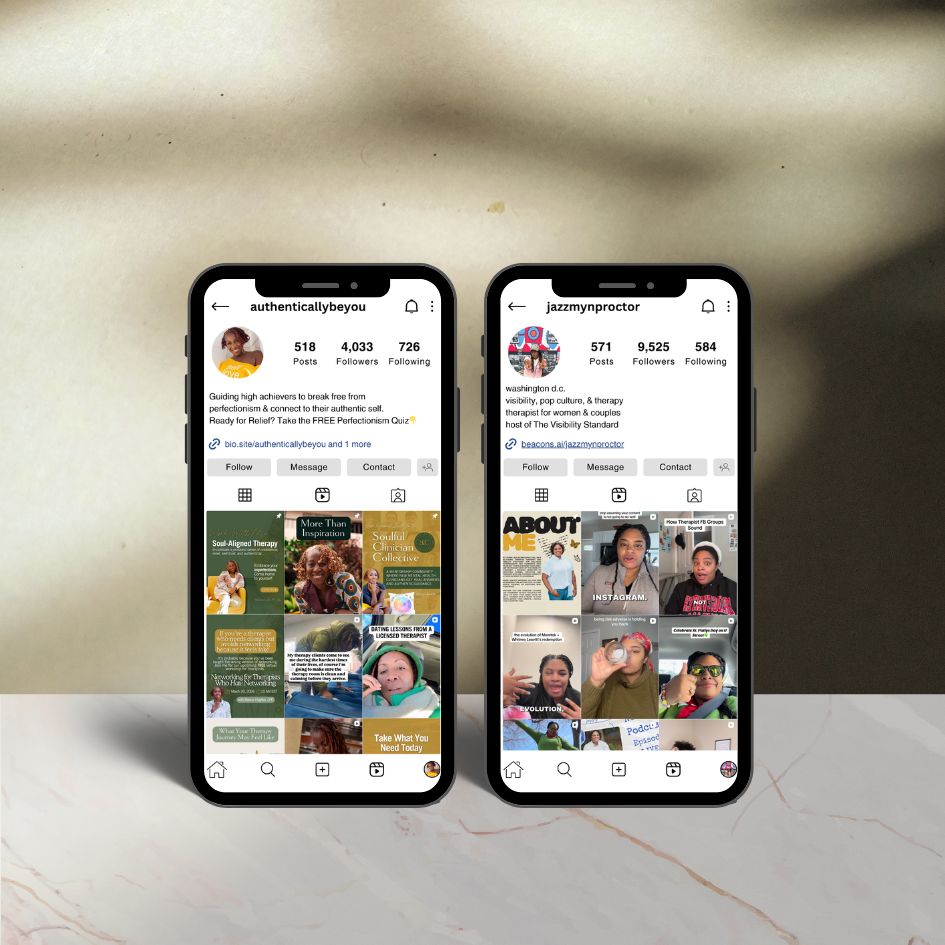
Follow Bianca: Instagram, Threads, LinkedIn
Follow Jazzmyn: @jazzmynproctor
Therapists Use Different Platforms: Here’s What’s Working for Jazzmyn and Bianca
Choosing where to show up online is just as important as deciding how to show up. Jazzmyn and Bianca both use multiple platforms, but they pick them intentionally, based on what aligns with their goals, strengths, and comfort levels.
Instagram remains central for both.
For Jazzmyn, Instagram is a space where she mixes formats that have performed well for her, especially videos and reels, but she also posts carousel content when it supports the idea she’s sharing. She defines success not by follower count, but by meaningful interaction. “My definition of success is any post that starts a conversation,” she explained. She leans into formats that allow people to hear her voice and decide if she might be a fit before they ever reach out.
Bianca also centers her efforts on Instagram, especially Stories because that allows her to connect without feeling like she’s always “on stage.” As I mentioned, her audience responds well to affirmations, permissions, and short, interactive content, especially when she uses polls or other engagement features she can test in Stories. Watching her audience respond helps her understand what content resonates most and she can build off of that
Threads offers a different kind of connection.
Bianca has found Threads valuable for engagement without the pressure of visuals. She uses it to answer questions and spark conversations, making it feel more relational than broadcast-focused. “Honestly, if you look at what questions people ask and give thoughtful replies — and create Thread content on your page — you can do really well,” she said.
Jazzmyn uses Threads more selectively, mainly to connect with collaborators or potential podcast guests. It’s not her main stage, but she sees it as a conversational space to meet people and build community without over-curating content.
LinkedIn serves another purpose.
For Bianca, LinkedIn supports her professional footprint. She posts articles and text-based content aimed at clinicians and professionals in her niche. “It’s more about credibility and connection with peers than client acquisition,” she explained. She keeps the tone professional but approachable, making sure her posts reflect her expertise while still being readable and relatable.
Other formats they rely on:
- Longer-form content: Jazzmyn’s podcast, The Visibility Standard, extends her social presence, giving her room to dive deeper into topics than short-form content allows.
- Interactive features: Bianca leans into polls and Q&A in Stories, because that’s where her audience actually responds, rather than just passively scrolling.
The key takeaway from both therapists is that platform choice isn’t random. They don’t hop on every trend just because it exists. Instead, they pick spaces where they can show up consistently, communicate in a voice that feels authentic, and engage in ways that matter, rather than posting just to check a box.
Making Social Media Work for Your Practice
At the end of the day, social media is just one piece of the puzzle. It can amplify your voice, showcase your expertise, and connect you with people who might never find you otherwise but it works best when it’s integrated into a bigger marketing mix. Your website, SEO, blogging, referrals, and professional networks all feed into each other, and social media can complement these channels rather than replace them.
Think of it as a long-term growth tool rather than a quick fix. Posting consistently isn’t the only goal; it’s about creating value, building trust, and leaving a footprint that feels authentic to you and your practice. Sharing insights, experimenting with content, and paying attention to what resonates will give you data to refine your approach over time. Pair that with a strong website, clear messaging, and a referral strategy, and social media becomes a catalyst for steady, meaningful growth rather than a source of stress (!!!!)
A few common misconceptions to watch out for: you really don’t need to be on every platform, you don’t need viral content to make an impact, and your follower count isn’t the measure of success. Instead, focus on real engagement, meaningful connections, and creating content that reflects your professional voice.
At the end of the day, there isn’t a single “right” way to do social media in private practice. What matters most is showing up thoughtfully, using the platforms that make sense for you, and trusting that even small, consistent efforts add up over time. Social media can support your practice, extend your reach, and strengthen your professional presence but it should serve your goals, not overwhelm them.
FAQ about social media for therapists
Do I have to be on every social media platform as a therapist?
No! Social media isn’t a requirement for every private practice (at all). Pick platforms that feel manageable, align with your goals, and let you show up authentically. It’s better to be consistent on one or two than to stretch yourself across everything.
How often should I post?
There’s no magic number. Consistency matters more than frequency. Even posting once a week with thoughtful, engaging content can be more effective than daily posts that feel rushed or disconnected from your goals. All the algorithm’s change what they’re looking for so often it is better to fall into a groove with posting consistently rather than try to figure out all of the parameters for each one.
What kind of content should I share?
Focus on what resonates with your audience. This could be short videos, Stories with interactive elements, insights, affirmations, or longer-form content like podcasts or articles. The key is value, engagement, and authenticity, not perfection.
Do I need a large following to see results?
No. Engagement and meaningful connections matter far more than follower count. Even a small audience can generate referrals, website traffic, and professional opportunities if you show up intentionally.
Pin for Later:

Jordin Brinn is the founder and lead designer of Unica Formo — a creative studio in Columbus, Ohio, specializing in custom Showit website design and brand strategy for service-based businesses like coaches, consultants, therapists, creatives, and wellness professionals. With over a decade of business experience, she helps clients bring strategy, clarity, and personality to their online presence.
Explore design services and free resources at unicaformo.com.


