



A backlink strategy for service providers is one of the most overlooked but powerful parts of SEO when it comes to building long-term visibility and improving your search rankings.
Over the past few years, I’ve tackled a lot of different SEO strategies and topics for service providers here on the blog. From optimizing your website images correctly, to structuring your website properly with clear heading hierarchy, to fixing broken links and understanding what actually makes a blog worth having and rank on Google — I’ve covered a lot of the foundational SEO pieces that help service providers show up online.
But one area we haven’t really gone deep into yet is backlinks.
So in this post, we’re breaking down what a backlink strategy actually looks like, why it matters for SEO authority, and how you can start applying it in a way that makes sense for your business. While this can technically apply to any industry, I’m specifically framing this through the lens of service providers; but the approach remains true for any industry.
What Is a Backlink and Why It Matters for SEO
A backlink is when another website links to your website. That’s it.
It can show up in a few different ways. Someone might link to your homepage, a blog post, a service page, or even a resource you’ve created. But at its core, it’s just one website pointing to another.
From an SEO perspective, backlinks act as a signal of trust. When another site links to yours, it’s essentially telling search engines like Google that your content is credible, relevant, and worth referencing.
This is important because Google doesn’t just rank websites based on what they say about themselves. It also looks at how the rest of the internet responds to them. Backlinks help provide that outside perspective.
The more quality backlinks you have from reputable websites in your industry or related spaces, the more confidence Google has in your site overall. That confidence is what we refer to as SEO authority, and it plays a major role in how and when your content shows up in search results.
This doesn’t just impact one page. Backlinks can strengthen your entire website over time, which means your blog posts, service pages, and even older content can start performing better as your authority grows.
Not all backlinks carry the same weight. A link from a well-established website, podcast, or publication will typically have more impact than a random directory or low-quality site. But even smaller, relevant links still contribute to your overall authority when they are built consistently over time.
Types of Backlinks for Service Providers
Like I mentioned, not all backlinks are created equal, and understanding the different types helps you focus your energy on the ones that actually move the needle for SEO. (But all backlinks are good if they are authentic; nottt talking about spam sites or ones you’re paying for, but a true backlink is good no matter what.)
For service providers, backlinks generally fall into a few key categories based on where they come from and how they’re earned.
The most valuable type is what you could call editorial or authority backlinks. These are links you earn from trusted sources like podcasts, guest features, industry publications, or expert roundups. They tend to carry the most weight because they come from websites that already have established credibility in Google’s eyes. (Apple Podcasts, Substack, or widely known publications.)
Then there are relationship-based backlinks. These usually come from people you already know or work with, such as collaborators, clients, or partners. These links might feel more casual, but they are often highly relevant, which is something Google values. A link from someone in your industry or ecosystem can still strengthen your authority, especially when it is part of a consistent pattern.
You also have directory and listing backlinks. These include things like professional directories, niche listings, and local business profiles. While they are not usually the strongest individually, they help establish legitimacy and consistency across the web, which supports your overall SEO foundation. These are usually the easiest to build, because many directories are free and only require your basic business information.
Finally, there are mentions and unlinked references. These are instances where your brand or work is mentioned online without necessarily linking directly to your website. While they are not traditional backlinks, they can still contribute to your overall authority and visibility, especially when they come from credible sources. I highly recommend that if you fall into this category, you reach out to the publisher or website owner to ask for a link. If they are already sharing your quote, work, or research, they will often be happy to credit you properly.
The key takeaway here is that backlink strategy is not about chasing one type of link. It is about building a mix of relevant, high-quality signals over time that collectively strengthen how search engines understand your credibility.
How to Build a Backlink Strategy as a Service Provider (with real examples)
Building a backlink strategy does not have to feel overly technical or complicated. At its core, it is really about intentionally putting your work in places where it can be referenced, shared, and linked back to over time.
One of the most effective ways to do this is through content collaboration or what I often call a “blog swap.” This is where you partner with someone in your industry who serves a similar audience but is not a direct competitor. For example, I might write a blog post for a copywriter about why branding matters for service-based businesses or what makes a therapist’s website convert better. In return, they write a post for my site about something in their area of expertise, like copywriting for wellness providers or how photography impacts brand perception.
This works really well because both parties get a high-quality backlink, both websites gain SEO authority, and both audiences get content that is genuinely useful and relevant. It is not just link building, it is value exchange.
Another example is showing up in community-driven spaces like Reddit. This does need to be done carefully because Reddit is very strict about self-promotion and spam. But when done correctly, it can be powerful. The key is to actually participate and become a trusted voice in a specific niche thread or community, whether that is therapists, dietitians, interior designers, or other service providers. When you consistently provide helpful answers, people naturally click through your profile, and some will end up on your website. Occasionally, your content may also get referenced or linked when it genuinely answers a question someone is asking.
You can also build backlinks through events, collaborations, and anything you are already participating in within your industry. This could be guest speaking on a podcast, joining a virtual summit, contributing to a workshop, or being featured in a roundup or interview. These types of opportunities often come with natural backlink placements through show notes pages, event pages, or recap articles, and they can be some of the most valuable because they come from already-established platforms.
Alongside this, it is also important to make sure your business is listed in directories and platforms that make sense for your industry. For service providers, this might include niche directories, professional associations, coaching or therapy directories, design directories, or local business listings. While these links are not always the strongest individually, they create consistency across the web and help reinforce your credibility in a very foundational way.
Finally, a big part of backlink strategy is simply creating content that is worth referencing. When your blog posts, guides, or resources genuinely help people solve a problem, they naturally get shared and linked to over time. This is one of the most sustainable ways to build backlinks because it compounds as your content library grows and why I also encourage my clients to blog if they can (though not all blog posts are created equally and I wrote about how to blog well here).
The key idea here is that backlinks are not something you collect in isolation. They are something that naturally happens when your work exists in the right spaces, solves real problems, and is shared within aligned communities.
Final Thoughts on Backlink Strategy for SEO Authority
A backlink strategy for service providers is not about chasing links or trying to game search engines. It is about building visibility in the spaces where your expertise naturally belongs.
When you start to think of backlinks less as a technical SEO tactic and more as a byproduct of collaboration, credibility, and useful content, the entire process becomes much more sustainable.
The service providers who consistently show up in search results are not always the ones doing the most. They are often the ones who have built a steady presence across other websites, communities, and platforms that reinforce their authority over time.
And the best part is, this is not something reserved for big brands or established businesses. It is something you can start building right now through the relationships you already have, the content you are already creating, and the spaces you are already part of.
Backlinks are not the whole SEO strategy, but they are one of the clearest signals that your work is being seen, referenced, and trusted across the web.
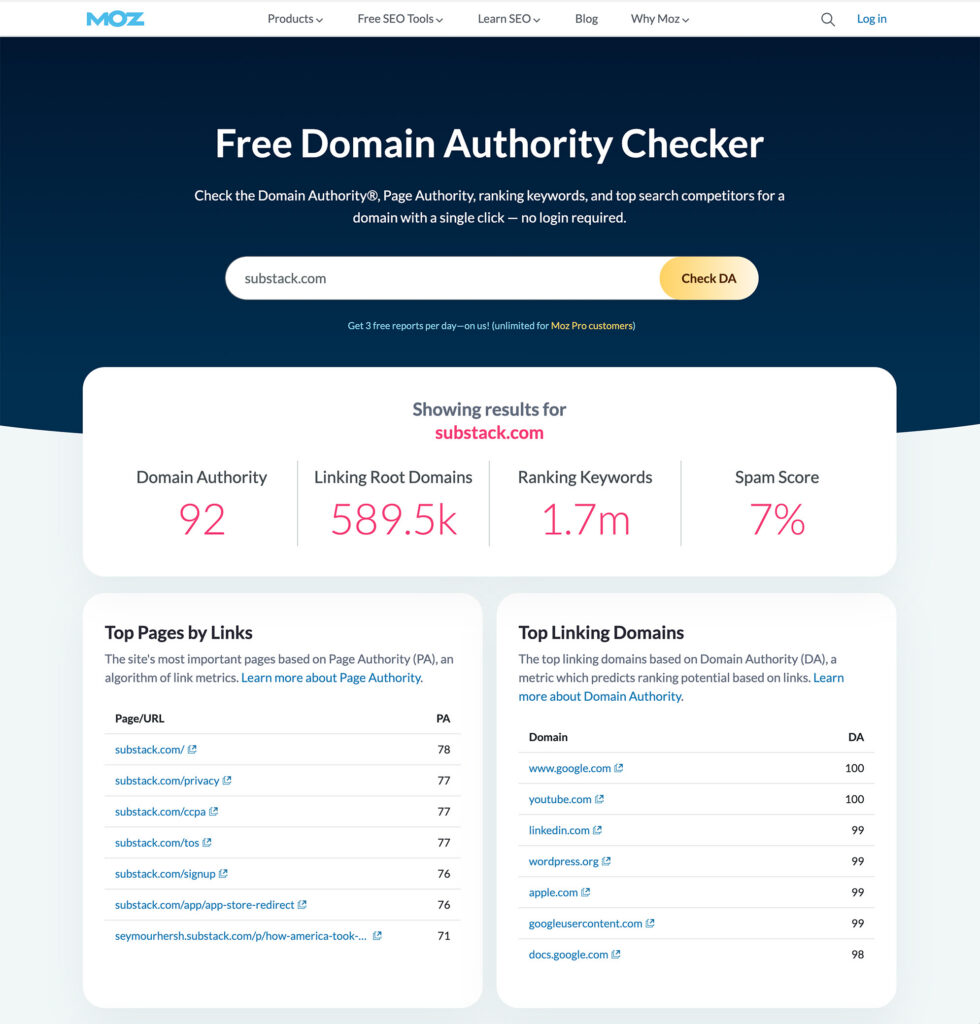
Pro Tip: How to Check the Strength of a Website
A quick way to get a general sense of how strong or credible a website is before pursuing a backlink is to check its domain authority using Moz’s free Domain Authority checker.
Domain authority is not a direct Google ranking factor, and there has been ongoing discussion in the SEO world about how much weight it really carries today (which is actually less than it used to).
That said, it is still a helpful benchmark when you are trying to understand whether a website is likely to provide a stronger or weaker backlink. In general, higher authority sites tend to have more established credibility, which often translates into more impactful backlinks over time.
You can use Moz’s tool here. The goal is not to obsess over the score, but to use it as a loose guide when deciding which opportunities are worth prioritizing.
Frequently Asked Questions
What is a backlink in SEO?
A backlink is when another website links to your website. It is one of the signals Google uses to understand how credible and relevant your content is, which can influence how your site ranks in search results.
Why are backlinks important for SEO?
Backlinks are important because they act as external signals of trust. When other reputable websites link to your content, it tells search engines that your website is worth referencing, which can help improve your overall SEO authority and rankings over time.
Do all backlinks help SEO?
Not all backlinks carry the same weight. High-quality, relevant backlinks from trusted websites tend to have more impact than low-quality or spammy links. That said, legitimate, natural backlinks all contribute to your overall authority when they are built over time.
What are the best types of backlinks for service providers?
Some of the most valuable backlinks come from podcasts, guest features, industry publications, collaborations, and expert roundups. Relationship-based links and relevant directories can also help build a strong foundation of SEO authority.
How do service providers get backlinks?
Service providers can build backlinks through collaborations, guest content, podcast interviews, directory listings, community participation, and by creating helpful blog content that others naturally want to reference and link to.
Is domain authority important for backlinks?
Domain authority is not a direct Google ranking factor, but it can be a helpful guideline when evaluating the strength of a website. Higher authority sites generally tend to pass more SEO value, so it can be useful as a rough comparison tool when choosing backlink opportunities.
Pin for Later

Jordin Brinn is the founder and lead designer of Unica Formo — a creative studio in Columbus, Ohio, specializing in custom Showit website design and brand strategy for service-based businesses like coaches, consultants, therapists, creatives, and wellness professionals. With over a decade of business experience, she helps clients bring strategy, clarity, and personality to their online presence.
Explore design services and free resources at unicaformo.com.


