


- Anxiety & OCD Therapist Branding + Website Design for Emily Austin Therapy
- The Challenge
- Before & After
- Creating the Brand Identity
- Anxiety and OCD Therapist Branding and Website Design
- Getting Specific About Anxiety and OCD
- A Website That Feels Like Emily
- From Branding to Showit
- A Brand That Has Grown With Emily
- What Emily Had to Say
- Anxiety & OCD Therapist Branding + Website Design FAQ
- Your Brand Should Be as Specific as Your Practice
Anxiety & OCD Therapist Branding + Website Design for Emily Austin Therapy
Anxiety and OCD therapist branding and website design was the focus of this project for Emily Austin Therapy, a therapist specializing in anxiety and OCD for millennial and Gen Z women in New York, New Jersey, and Florida.
Emily already had a clear specialty and a strong understanding of the women she wanted to reach. What she needed was a brand and website that could communicate all of that without feeling clinical, generic, or overly serious.
The goal was to create an identity that felt modern, artistic, thoughtful, and specific to her practice, then carry that identity through a custom Showit website.
The Scope: Custom Showit Web Design & Branding & VIP Day(s)
The Vibes: Modern. Artistic. Intentional.
The Industry: Therapy | Anxiety & OCD

The Challenge
Emily’s practice is highly specific. She works with women who are dealing with things like high-functioning anxiety, intrusive thoughts, perfectionism, people-pleasing, reassurance seeking, and OCD.
These are not always easy things to explain on a website.
There’s a fine line between being clear enough that the right person immediately recognizes themselves and using so much clinical language that the whole experience starts to feel cold or overwhelming.
Emily wanted her website to feel like a quiet conversation with someone who gets it.
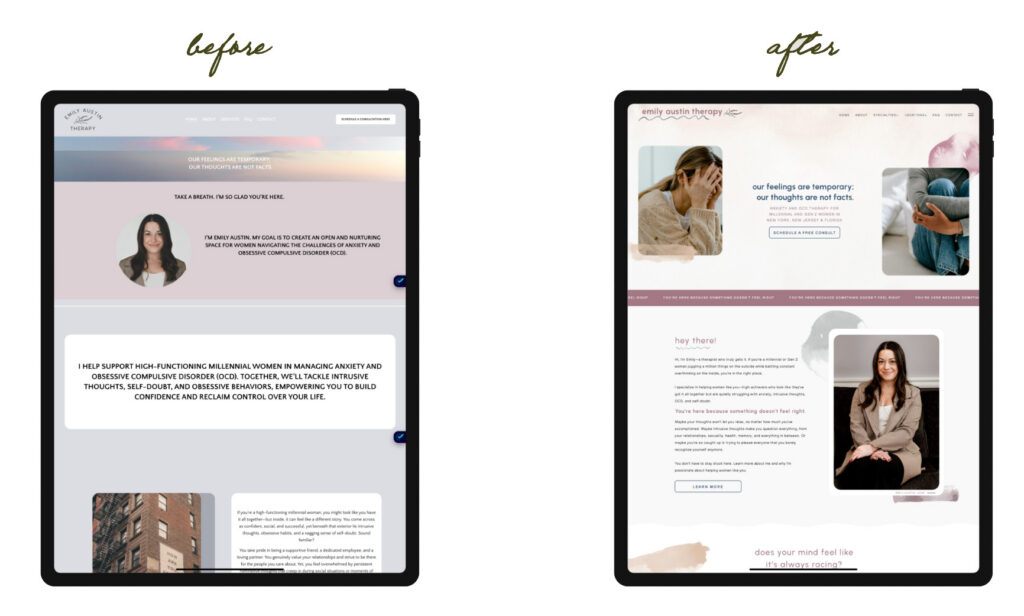
At the same time, her previous website no longer reflected where her practice had grown. It felt dated and generic compared to the specificity of her work, and she wanted a visual identity that felt much more intentional.
This project was about more than redesigning a website. It was about creating a brand that could actually support the direction Emily was taking her practice.
Before & After
Creating the Brand Identity
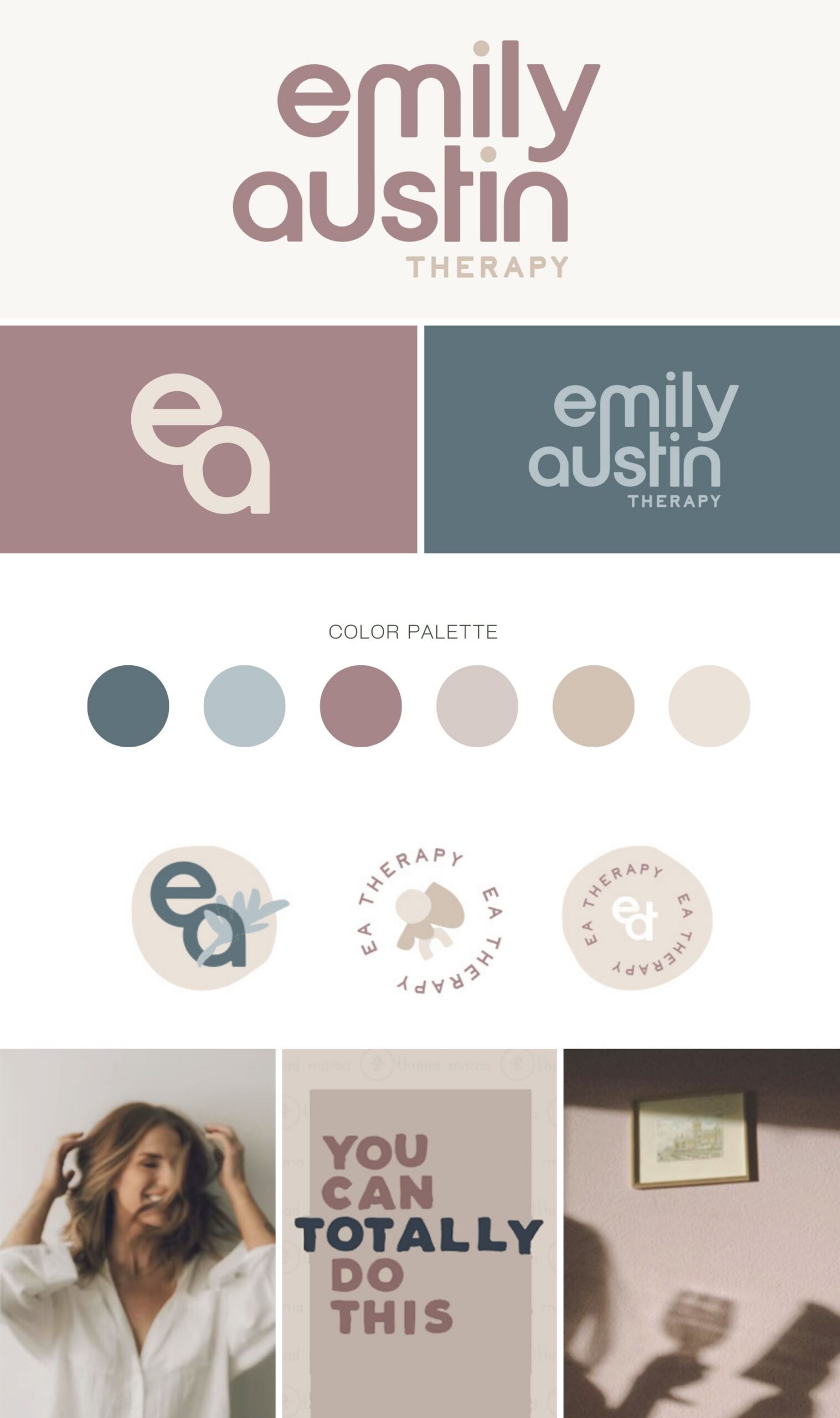
Before I could design the website, I needed to establish a visual identity that felt distinctly Emily.
We leaned into a softer, more artistic direction rather than the typical visual language you often see in therapy branding.
The finished brand uses a combination of refined typography, expressive illustration, hand-painted details, and watercolor-inspired textures. The result feels polished without feeling overly corporate and artistic without losing clarity.
That balance was especially important for Emily’s audience.
Someone looking for help with anxiety or OCD may already spend a lot of time overthinking, second-guessing, and trying to make sense of what they’re experiencing. The brand needed to feel approachable enough to invite them in while still communicating that Emily knows her stuff.
Anxiety and OCD Therapist Branding and Website Design
Once the branding was established, I carried that visual direction into the website.
Instead of treating the brand and website as two separate projects, I approached the anxiety and OCD therapist branding and website design as one cohesive experience.
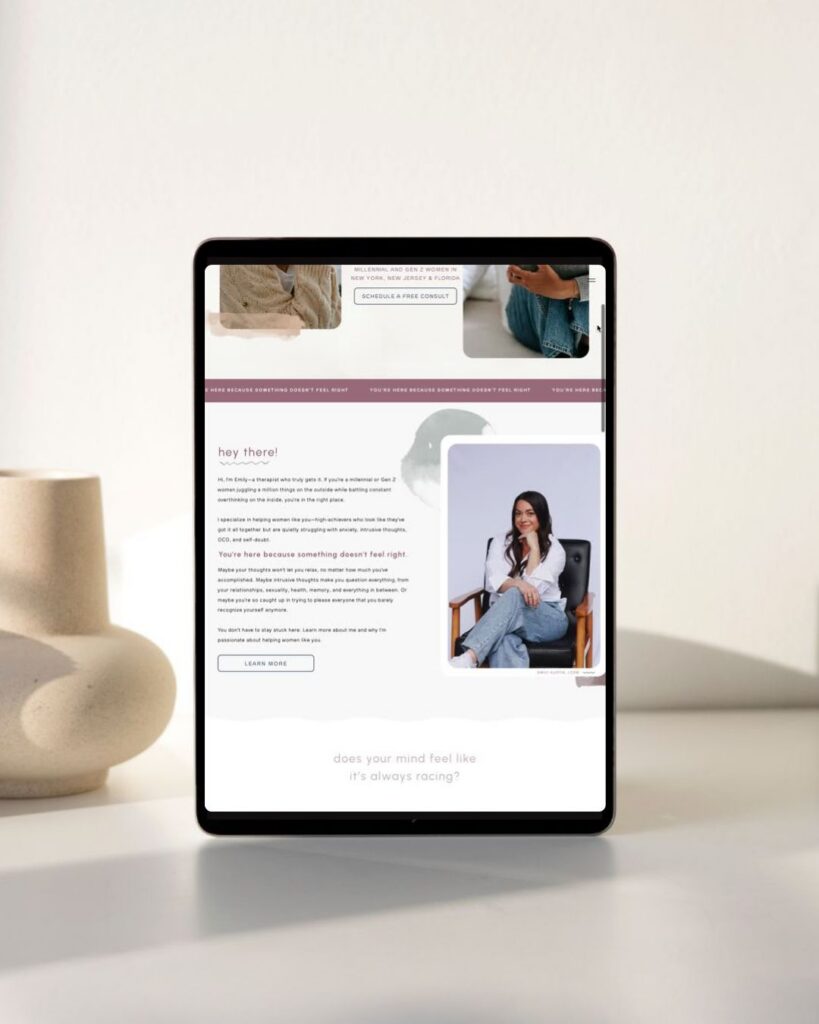
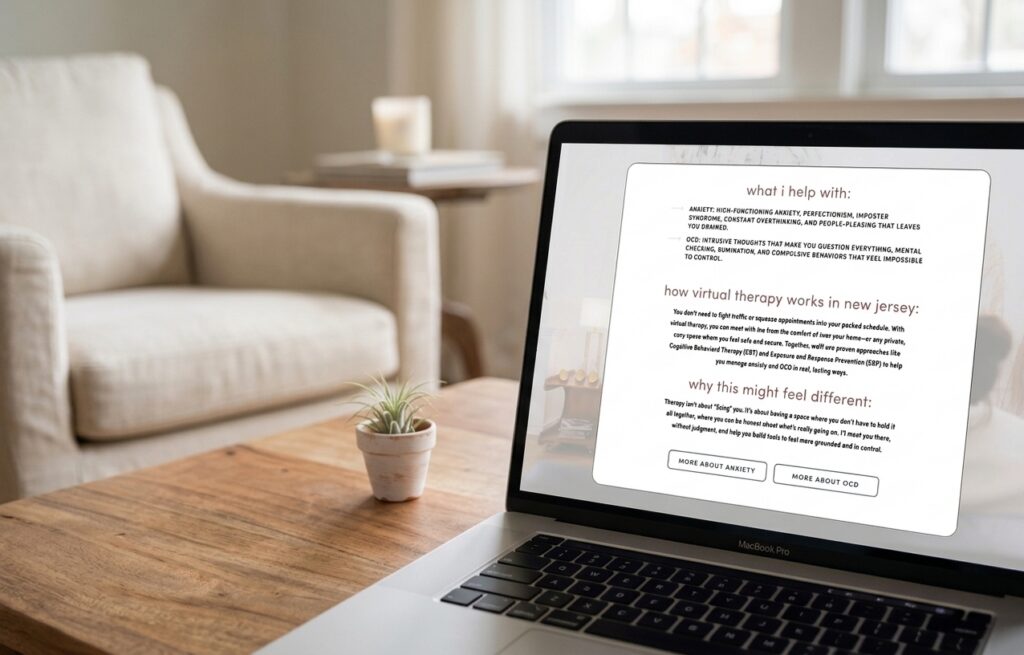
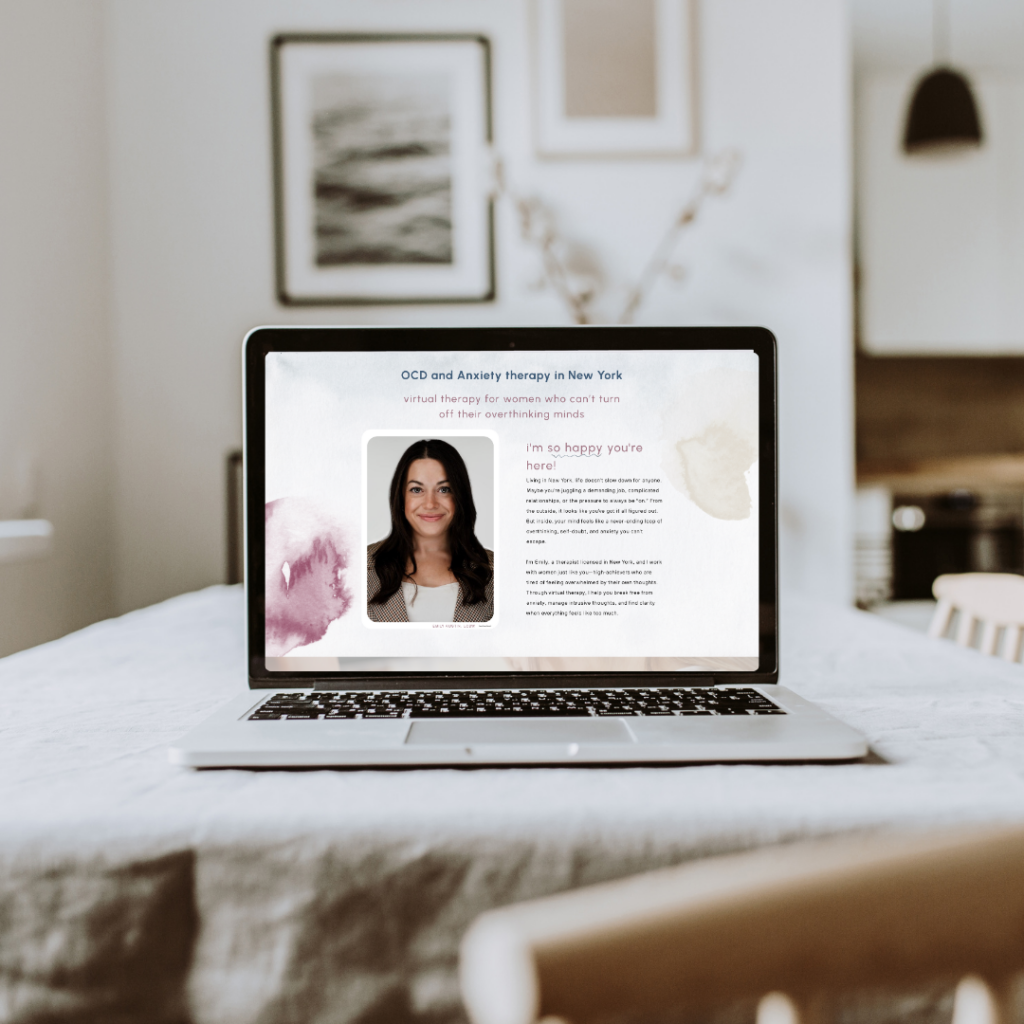
The watercolor-inspired elements became part of the website itself, showing up alongside oversized typography, organic shapes, painted accents, and editorial-style layouts.
The design has movement and personality without making the information difficult to find.
That was a big part of the strategy. Emily’s website needed to feel interesting enough to stand out, but the design could never get in the way of someone trying to figure out whether she was the right therapist for them.



Getting Specific About Anxiety and OCD
One of the most important parts of this project was getting specific.
Emily doesn’t work with everyone experiencing every type of mental health concern. Her specialty is much more focused, and the website needed to make that obvious.
The messaging speaks directly to millennial and Gen Z women experiencing anxiety, intrusive thoughts, OCD, perfectionism, people-pleasing, and the constant pressure to keep everything together.
That specificity gives the right potential client a chance to see themselves in the website.
Instead of broad statements about “living your best life” or “finding balance,” the content gets much closer to the thoughts and experiences Emily’s clients are actually having.
That makes the anxiety and OCD therapist branding and website design more than a visual project. The strategy behind the messaging helps the website attract and connect with the people Emily is actually trying to reach.
A Website That Feels Like Emily
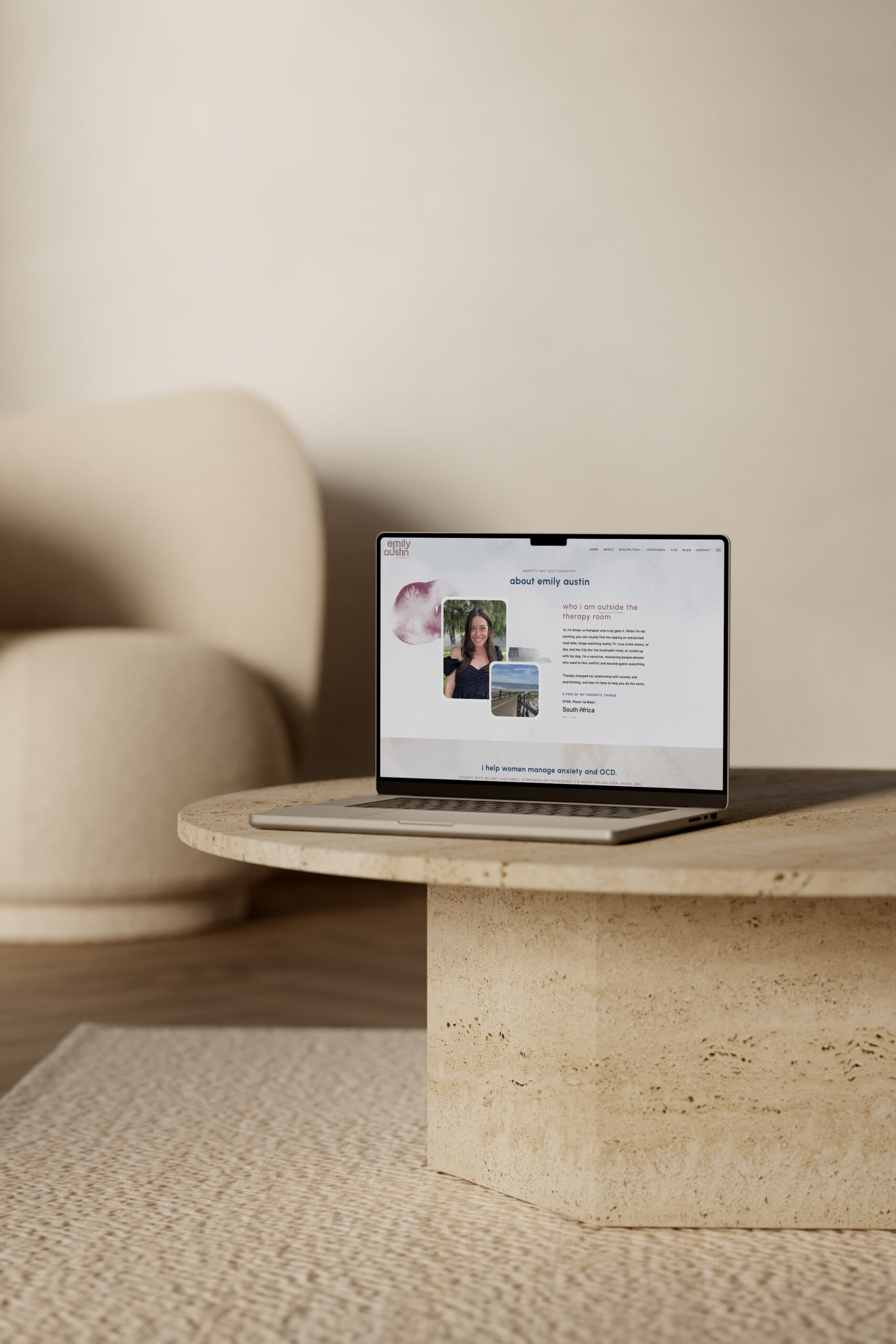
The finished website is current, expressive, and unmistakably personal.
Painted textures and watercolor-inspired elements add visual interest throughout the site, while the typography and layouts keep everything feeling clean and intentional.
There are also moments where the copy gets much more direct.
Statements like “YOU’RE HERE BECAUSE SOMETHING DOESN’T FEEL RIGHT” immediately speak to the person on the other side of the screen instead of sounding like traditional therapy website copy.
That directness was important.
Emily’s brand doesn’t need to convince someone that therapy is valuable. It needs to help the right person recognize that Emily might be the person they’ve been looking for.
The website was designed around that idea.
From Branding to Showit
I built the custom website in Showit so Emily would have the flexibility to continue evolving her online presence as her practice grows.
The site includes dedicated pages for her specialties as well as location-specific content for New York, New Jersey, and Florida.
The structure gives visitors clear paths to find the information they need while also creating a stronger foundation for organic search.
I also approached the development with SEO in mind from the beginning rather than trying to tack it onto the website after the design was finished.
For a therapist with a specific niche and multiple service areas, that structure matters. The website needs to look good, but it also needs to make sense to search engines and to the people actually searching for Emily’s services.
A Brand That Has Grown With Emily
One of my favorite parts of this project is that the brand wasn’t designed to be a one-time solution.
Emily’s practice has continued to grow, and we’ve continued working together since the original branding and website project. I’ve created social media templates, worked on additional website updates, and helped refine her online presence as her business has evolved.
Because I already understand Emily’s brand, audience, and direction, we can build on what we’ve created instead of starting from scratch every time. Her website and branding have continued to evolve without losing the personality and visual identity that made them feel like Emily in the first place.
That’s one of my favorite parts of being a designer. I don’t want every project to end with “here’s your website, good luck!” Sometimes the best work happens after launch, when you’ve had time to use your website, grow your business, and figure out what needs to change.
The finished anxiety and OCD therapist branding and website design feels artistic, current, thoughtful, and personal while still communicating the depth of Emily’s expertise. It doesn’t look like a generic therapy website, and it doesn’t try to make her practice feel more clinical than it actually is.
Instead, it gives Emily a brand and website that can grow with her practice, which is exactly what I wanted it to do from the beginning.
What Emily Had to Say
“Jordin was such a dream to work with. From the beginning, she was so patient, knowledgable, responsive, and creative. She understood my vision from the very beginning (I tend to be very particular), and brought my website to life – font choices, color palette, illustrations, images, and everything in between. She did not push me into anything I wasn’t comfortable with, or including more services in my package. Knowing what I know now, her work is worth 10x what I paid. I will absolutely be using her again down the line to recreate my logo and focus on instagram templates/graphics. I am so happy I made the switch from Squarespace to Show It, which has SO many cool design elements. I feel like our paths crossed at such an incredible time, and I would recommend her to ANYONE!”
-Emily A., Owner of Emily Austin Therapy
Anxiety & OCD Therapist Branding + Website Design FAQ
Why should a therapist consider branding and website design together?
When the two are created together, the visual identity and website can work as one cohesive experience. Your logo, colors, typography, imagery, messaging, and website structure all have the same strategic foundation instead of feeling like separate pieces.
What should anxiety and OCD therapists communicate through their branding?
Your branding should give potential clients a sense of your personality and approach while still feeling professional. For a specialized practice like Emily’s, the visual identity also needed to feel distinct from more traditional clinical branding.
Can a therapist’s brand be artistic and still feel professional?
Absolutely. Emily’s brand uses watercolor-inspired elements, expressive typography, illustrations, and unexpected color while maintaining a polished and professional overall experience. Your brand doesn’t have to look clinical to communicate expertise.
Can branding be used beyond the website?
Definitely. A strong brand identity should give you a visual system you can use across your website, social media, graphics, marketing materials, and future content. That’s one reason I like building the brand and website together.
Your Brand Should Be as Specific as Your Practice
If you’ve spent years refining your niche, working with the right clients, and figuring out what makes your approach different, your branding and website should communicate that.
I’ll help you build a brand and custom Showit website that feels like your practice, speaks clearly to the people you want to reach, and gives you a visual foundation you can continue using as your business grows.

Jordin Brinn is the founder and lead designer of Unica Formo — a creative studio in Columbus, Ohio, specializing in custom Showit website design and brand strategy for service-based businesses like coaches, consultants, therapists, creatives, and wellness professionals. With over a decade of business experience, she helps clients bring strategy, clarity, and personality to their online presence.
Explore design services and free resources at unicaformo.com.


